Building Immersive Spaces with Holographic Projection: A Complete How-To Guide
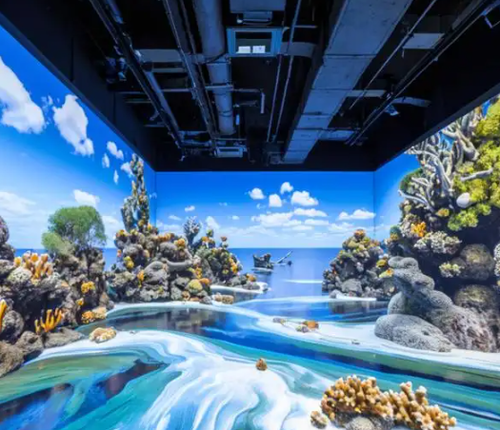
Holographic projection technology has rapidly evolved from a futuristic concept into a mature commercial solution for creating immersive spaces. Today, businesses across exhibitions, hospitality, education, and entertainment are leveraging this technology to deliver unforgettable sensory experiences. The core principle is not simply about flashy visuals—it is about the trinity of visual overlay, virtual-real interaction, and instantaneous scene transformation, working together to craft a new dimension of perception.

Step 1: Define Your Scenario and Requirements
The first and most critical step is clarifying the purpose of your immersive space. Are you building a corporate showroom to impress potential clients and investors? A wedding banquet hall designed to create magical, personalized moments? Or perhaps an educational classroom where students can walk through historical events or explore the human body in 3D? Each scenario demands a different approach to content design, hardware configuration, and budget allocation.
Understanding your target audience is equally important. Corporate clients may value brand storytelling and data visualization, while wedding couples prioritize emotional resonance and photo-worthy environments. Define your key performance indicators upfront—whether that means increased brand engagement, higher visitor dwell time, or measurable educational outcomes.
Step 2: Choose the Right Technology and Hardware
Your technical blueprint should align with your spatial requirements and budget. Here is a practical breakdown of the three main tiers:
| Application Type |
Recommended Setup |
Best For |
| Small-Scale / Fixed View |
Holographic chamber or holographic display cabinet |
Single product showcases, digital human displays, retail counters |
| Large-Scale / Multi-Scene |
Multi-projector edge-blending system + holographic screens or direct wall/floor projection |
Museums, corporate exhibition halls, immersive dining, wedding venues |
| Premium / Interactive |
Light Field (LF) display systems |
Multi-user, multi-angle true holographic interaction without wearables |
Key hardware components typically include high-lumen projectors (10,000+ lumens recommended for large venues), edge-blending and warping software, surround sound systems, and a centralized control unit. For interactive setups, consider integrating motion sensors, touch interfaces, or LiDAR tracking. While Light Field systems offer the most advanced glasses-free 3D experience with full parallax, their current cost remains high—making them suitable primarily for flagship installations and high-budget projects.
Step 3: Content is King—Create Your Core Assets
Hardware alone cannot captivate an audience. The soul of any immersive space lies in its content. You will need custom 3D modeling, holographic video production, and interactive scripting tailored to your narrative. Key content development strategies include:
- Corporate & Brand: Develop a digital human IP or brand mascot that can interact with visitors in real time, narrate your company story, and demonstrate product features in 3D.
- Cultural Tourism & Heritage: Reconstruct historical scenes, ancient architecture, or natural landscapes, allowing visitors to travel through time within a fully immersive environment.
- Events & Banquets: Build a content library with multiple themed packages (seasonal, romantic, futuristic) so venues can offer repeat clients entirely fresh experiences.
- Education & Training: Create interactive 3D models and simulation scenarios for medical training, engineering demonstrations, or safety drills.
Step 4: Integration, Calibration, and Ongoing Operation
The final phase is where everything comes together. System integration involves mounting and aligning all hardware components, calibrating projector arrays for seamless edge-blending and color uniformity, and stress-testing all interactive triggers. Pay careful attention to ambient lighting conditions—even the best projectors lose contrast in brightly lit rooms unless properly accounted for in the design phase.
Post-launch operations are equally vital. Regularly refresh your content library to keep the experience novel for returning visitors. Schedule routine maintenance for optical components, clean projector filters, recalibrate alignment quarterly, and keep software and firmware updated. A well-maintained system can deliver consistent wow-factor for years.
In essence, creating an immersive holographic space is about designing a what you see is what you get parallel world. Technology forms the foundation, but what truly moves people is the carefully crafted story and the one-of-a-kind experience it delivers.