logo
Home News

company news about How to choose between DLP projectors and 3LCD projectors

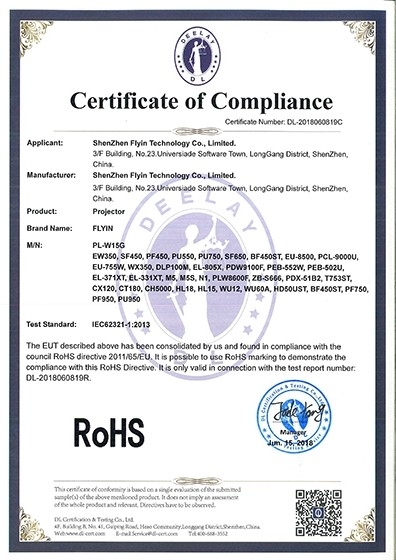
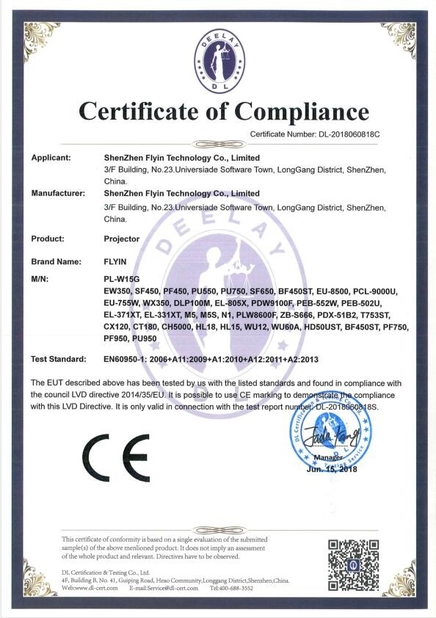
Certification
China Shenzhen Flyin Technology Co.,Limited certification
Customer Reviews
I rarely comment, but this time I had to. I can't spend a lot on a projector and Julia recommended this for me. I received the projector three days after it was shipped and I can't wait to take it apart. It looks even better than the picture. The projection effect is also great. I had a great shopping experience this time, so much thank Julia

—— Madison

SZFLYIN projector is best of quality. It's worth every penny. We use it almost everynight. Picture quality is very best. Vibrant colors and easy-to-adjust angles. We stream everything. Volume and speaker quality are much better than I expected. We projected the film onto our fence, which was 6 feet tall and least 20 feet . This projector is perfect

—— D.VIEW

I'm Online Chat Now
Company News
How to choose between DLP projectors and 3LCD projectors
Latest company news about How to choose between DLP projectors and 3LCD projectors

The choice between a DLP projector and a 3LCD projector boils down to your core needs: opt for 3LCD if you prioritize color accuracy and long-hour viewing; choose DLP if you value high contrast, portability, and fast refresh rates. Below is a detailed comparison across multiple dimensions to help you decide quickly:


Core Differences at a Glance
Comparison Dimension DLP Projector 3LCD Projector
Core Principle DMD chip with micromirrors reflecting light; colors synthesized via color wheel/LED filters Three primary colors pass through independent LCD panels separately, converged by a prism for imaging
Color Performance Color gamut covers ~90%-94% DCI-P3; prone to rainbow effect; slightly lower color accuracy Color gamut reaches over 95% DCI-P3; smooth color transitions; no rainbow effect
Contrast Ratio High native contrast ratio (5000:1+) for excellent dark scene details Slightly lower native contrast ratio; high-end models can enhance via advanced technologies
Brightness Efficiency Color brightness may be lower than white brightness High light efficiency; color brightness equals white brightness
Response Speed Fast micromirror response (≈0.01ms); minimal motion blur for dynamic content Slower LCD panel response (≈8ms); motion blur rate of ~1.5%
Size & Portability Simple optical path; compact and lightweight, ideal for portability Complex structure; larger size; poor portability
Lifespan Long DMD chip lifespan (20,000+ hours); sealed optical path for dust resistance LCD panel lifespan of ~6,000 hours; open optical path; higher maintenance costs
Maintenance Cost Easy maintenance; filter-free design common Regular bulb and filter replacement required; high LCD panel replacement cost
Ideal Scenarios Home theater (dark rooms), business presentations, portable projection Color-critical applications (e.g., design displays), education and training, bright environments
Key Advantages & Disadvantages
1. DLP Projector Advantages
  • Contrast & Dark Scenes: DMD micromirrors can fully close to deliver deep blacks, highlighting details in dark scenes (perfect for movie night landscapes).
  • Sharpness & Response: Crisp text display and ultra-fast response speed, suitable for fast-changing content (e.g., sports, gaming) with minimal motion blur.
  • Size & Cost-Effectiveness: Compact structure enables slim, portable models with higher cost-performance at the same price point.
  • Disadvantages: Rainbow effect may occur in single-chip models (affecting ~20% of users); color reproduction tends to be vivid but less accurate.
2. 3LCD Projector Advantages
  • Color Accuracy: Simultaneous imaging of three primary colors ensures high color brightness and natural transitions, ideal for color-critical fields (e.g., design, photography).
  • Viewing Comfort: No rainbow effect or flicker; comfortable for long-hour viewing without eye strain, suitable for education and extended business meetings.
  • Stable Brightness: Color brightness matches white brightness, maintaining clear, vibrant images even in bright environments.
  • Disadvantages: LCD panels are prone to aging, reducing brightness uniformity over time; larger body with relatively noticeable heat dissipation noise.
Scenario-Based Buying Recommendations
  1. Home Theater: Prioritize DLP for dark rooms (superior contrast for immersion); choose high-end 3LCD if you frequently watch HDR content and value color accuracy.
  2. Business & Office: DLP is ideal for text/chart presentations (crisp text + portability); 3LCD works better for colorful PPTs/videos (more vivid visuals).
  3. Education & Training: 3LCD is preferred for long teaching sessions—no rainbow effect, natural colors, and eye-friendly design for students.
  4. Outdoor/Portable Use: DLP is the top choice (compact size, better battery compatibility for on-the-go use).
  5. Design/Photography: 3LCD is a must—accurate color reproduction meets professional color requirements.

Summary
  • Choose 3LCD if your core needs are: color accuracy, long-hour viewing, no rainbow effect, or use in bright environments.
  • Choose DLP if your core needs are: high contrast, portability, fast refresh rates, budget constraints, and no sensitivity to the rainbow effect.
Pub Time : 2026-01-23 10:45:15 >> News list
Contact Details
Shenzhen Flyin Technology Co.,Limited

Contact Person: Mr. PingQuan Ho

Tel: 86-18038098051

Send your inquiry directly to us (0 / 3000)